

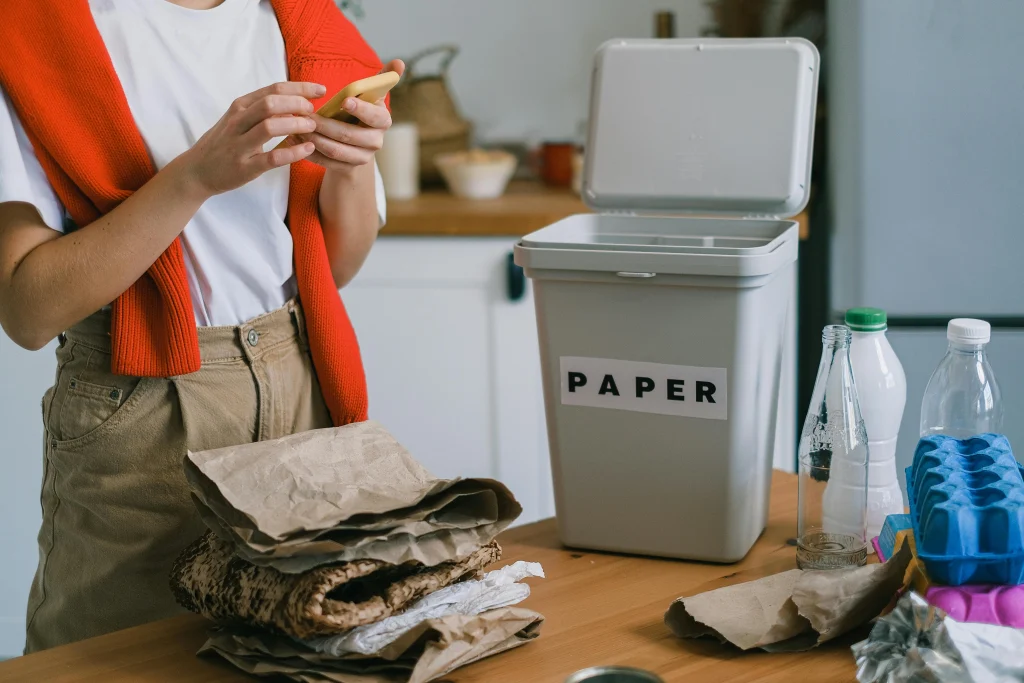
Clear labels on home bins can improve sorting more than many households expect because most waste decisions are made quickly. People throw something away while cooking, cleaning, unpacking groceries, or clearing a table. In those moments, the system has only a second or two to guide the choice. If the bins are unclear, even a well-meaning household can make repeated mistakes.
Waste educators, recycling coordinators, and home organization specialists often explain that improve sorting efforts work best when the system is visible and easy to understand at a glance. A labeled bin setup reduces hesitation, lowers confusion, and helps households build routines that feel automatic instead of complicated.
Why clear labels on home bins matter in daily routines
Most homes create waste in busy moments. A package is opened while dinner is cooking. Food scraps appear during meal prep. Paper, containers, and general trash collect during daily cleanup. These are not slow, careful sorting moments. They are fast decisions made while attention is already divided.
Behavior specialists often explain that clear labels on home bins matter because the brain usually chooses the easiest visible option under time pressure. If the bins look too similar or the categories are not obvious, people often guess. That guess may place recyclable material in trash, food scraps in the wrong stream, or reusable items into general waste.
This is why labeling is not a minor detail. It is part of how the whole system communicates with the household every day.
How clear labels on home bins help improve sorting
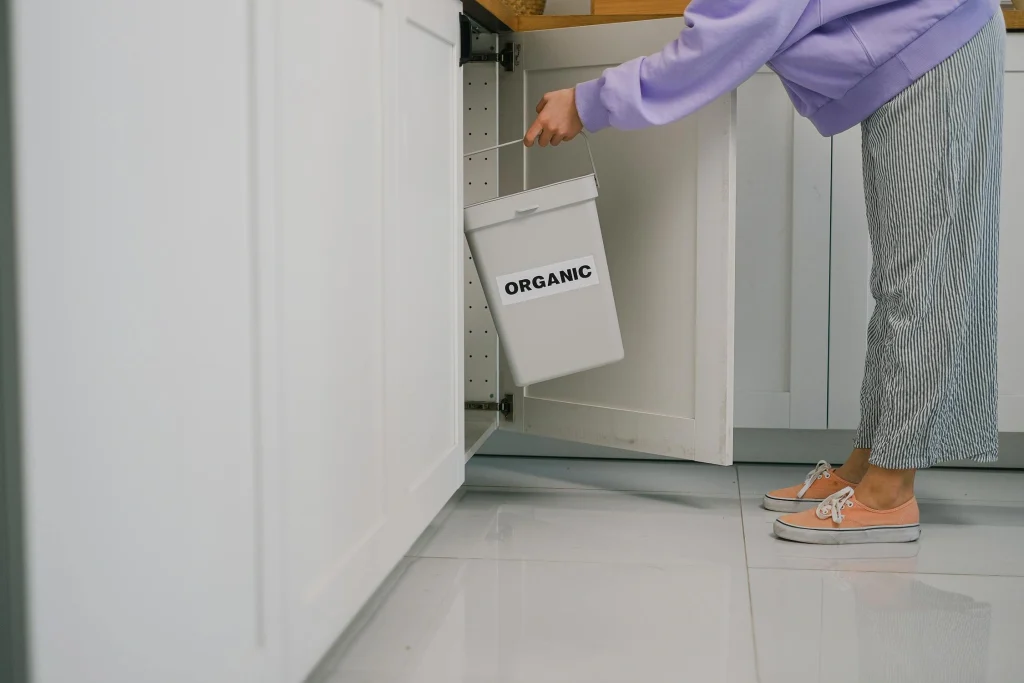
Clear labels on home bins help improve sorting by removing uncertainty at the point of disposal. Instead of asking each person in the home to remember every category from memory, the bin itself gives the answer. That small shift often makes the routine faster and more accurate.
Waste reduction experts often note that sorting improves when households can identify the right destination in one quick glance. A label that says “Food Scraps,” “Recycling,” or “Trash” is more useful than a color alone if the household is still learning the system. When labels are direct and simple, fewer items end up in the wrong place.
This matters because the strongest sorting systems are not the ones with the longest instructions. They are the ones that reduce decision effort in everyday use.
Credit: Guilherme Pedrosa / Pexels
Why households make sorting mistakes without clear labels
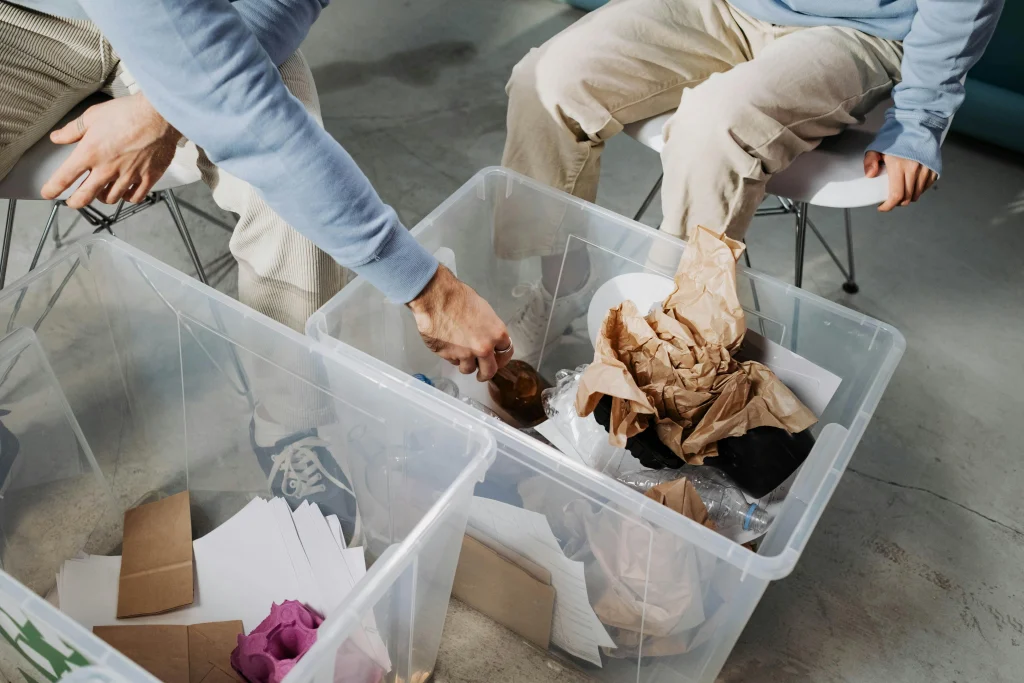
Sorting mistakes often happen for simple reasons. A person may not know whether an item belongs in recycling. Another may not know whether food-stained paper should go with compostable waste or trash. Children, visitors, and even regular household members may each interpret the same bin differently if the setup is not clearly marked.
Recycling educators often explain that lower waste mistakes depend on reducing guesswork. When bins are unlabeled, households often rely on habit or appearance alone. This can lead to contamination, overuse of the general trash bin, or wish-cycling, where doubtful items are placed into recycling without clear reason.
That is why labeling helps more than people expect. It creates a shared rule the whole household can follow, even when nobody has time to explain the system in the moment.
How labels support children, guests, and shared households
Labels are especially useful in homes where many people use the same space. Children may still be learning what belongs where. Guests may not know the household system at all. Shared living arrangements often include people with different habits and levels of attention to recycling. A clear sign reduces the need for repeated verbal reminders.
Home organization specialists often explain that shared systems work better when they depend less on private memory and more on public cues. A visible label turns the household rule into something everyone can see and follow. This often makes the system feel fairer and easier to maintain over time.
In that way, clear labels on home bins support more than sorting alone. They support smoother cooperation inside the home.
Why simple wording usually works better than detailed instructions
Many households think better labels must include long explanations, but experts often suggest the opposite. Simple wording usually works better because it can be understood faster. “Food Scraps,” “Paper and Containers,” or “Trash Only” is often more useful than a long list that people will not read while holding waste in one hand.
Behavior researchers often note that improve sorting efforts are strongest when instructions match the speed of the routine. A label should work in a second or two. It should not require study. If more guidance is needed, some households add a smaller example list below the main category name, but the top line usually needs to stay clear and short.
This is why labeling works best when it is direct. The system should answer the question before the person loses patience and uses the wrong bin.
Credit: Polina Tankilevitch / Pexels
What experts recommend when labeling household bins
Experts usually recommend starting with the bins used most often, especially in the kitchen, laundry area, or entry space where packages are opened. The label should be large enough to see easily, placed at normal eye level when possible, and written in plain language. If the home uses more than one waste stream, each should have a distinct and obvious label.
Waste system advisers also recommend checking whether the labels match actual local collection rules. A clear label only helps if it reflects what the household can really separate in that location. Once the wording is right, consistency matters. The same term should be used across the home instead of changing names from room to room.
This makes the system easier to learn. One clear category name repeated in the same way supports better memory and fewer mistakes.
Why clear labels on home bins support practical lower-waste living
Practical lower-waste living depends on systems that work during normal life, not only during careful moments. Clear labels on home bins support that goal because they make sorting faster, easier, and more reliable without asking the household to remember everything all the time. The label carries part of the work.
Waste reduction researchers often explain that lower waste mistakes usually begin with stronger feedback at the point of action. Labels provide that feedback. They tell the household what to do right when the choice is being made. This often leads to cleaner bins, better recycling habits, and less frustration around waste management.
That is why clear labels on home bins often improve sorting more than people expect. They turn a vague system into a visible one, and visible systems are usually the ones households can keep using well.
Frequently Asked Questions
Q: Why do clear labels on home bins improve sorting?
A: They reduce guesswork by showing the correct waste category at the exact moment someone needs to throw something away.
Q: What kind of labels work best on home bins?
A: Experts often recommend short, plain wording that can be understood quickly, such as “Recycling,” “Food Scraps,” or “Trash.”
Q: Do labels help in homes with children or guests?
A: Yes. Visible labels make the system easier for everyone to follow, including people who are new to the household routine.
Q: Should labels include long instructions?
A: Usually no. Simple wording often works better because it matches the speed of everyday disposal decisions.
Key Takeaway
Clear labels on home bins help improve sorting because they reduce guesswork, support household recycling habits, and lower waste mistakes during fast daily routines. Experts often explain that better systems are usually the ones people can understand in a second or two. Simple, visible labels make that possible. Understanding the value of clear labels on home bins helps households build cleaner and more practical waste habits over time.