
People often think of flowers first when they want to help pollinators, and that makes sense. Nectar and pollen are essential. But in hot weather, water matters too. Bees and other pollinators move through gardens, yards, balconies, and neighborhood greenspaces under dry, sunny conditions that can leave them needing more than bloom-rich planting alone. A simple shallow pebble water dish can become one of the easiest ways to make a space more supportive.
Pollinator specialists, wildlife gardeners, and ecology educators often explain that the safest water sources for small insects are not deep bowls or smooth open containers. They are shallow, stable places where insects can land securely without slipping into open water. That is why a shallow pebble water dish is often recommended as a practical support feature during hotter parts of the year.
Why pollinators need more than flowers in summer
Flowering plants give pollinators food, but warm weather creates other physical demands. Hot surfaces, strong sunlight, and long foraging hours can make small insects more vulnerable to dehydration and fatigue. In built-up neighborhoods, natural shallow water sources may be limited, especially during dry spells when puddles disappear quickly and damp soil becomes harder to find.
Wildlife researchers often note that gardens are usually designed around what people can see easily. Flowers are visible. Water needs are not. A yard may therefore look excellent for pollinators while still offering very few safe places for them to access moisture. This is especially true in small spaces where the only water source might be a deep plant saucer, a bird bath with steep sides, or nothing at all.
This is why water support can matter even in a flower-filled garden. Food brings pollinators in, but safe conditions help them keep using the space well.
Why open water is not always safe for small insects
Many people assume that any bowl of water helps wildlife. For birds and larger animals, that may often be true. For insects, however, water can be risky when the surface is too open, too deep, or too smooth. A bee landing on the edge of a deep dish may struggle to reach the water safely. If it slips, the container may become more dangerous than helpful.
Pollinator educators often explain that insects need landing points. They do not interact with water the same way larger animals do. A safe water setup must allow them to approach, pause, drink, and move away again without being forced into the water itself. This is why design matters so much, even for something as simple as a small backyard water source.
A helpful pollinator dish is therefore not just about adding water. It is about reshaping access to that water in a safer way.
How a shallow pebble water dish works
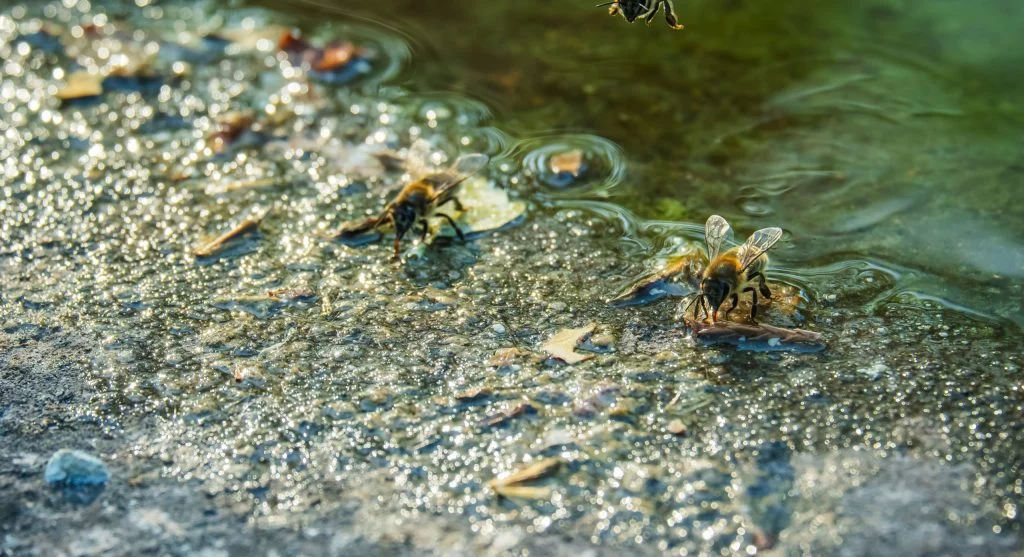
A shallow pebble water dish works by combining a small amount of water with a textured surface that rises above it. The pebbles create many tiny landing platforms where insects can perch while reaching moisture. Instead of facing one flat, exposed water surface, a bee or hoverfly can move carefully among the stones and drink with much less risk.
Garden habitat specialists often explain that this structure matters because it changes the water from a hazard into a usable resource. The dish stays shallow, the surface stays broken up, and the insects have stable footing. Even a very simple arrangement can be effective if the water is not too deep and the pebble layer remains easy to stand on.
This is one reason the idea works so well in home gardens. It is low-tech, inexpensive, and easy to adapt without changing the whole yard.
Why pebbles matter more than the dish itself
People often focus on the container, but the pebbles do most of the important work. A decorative shallow bowl may still be too slick or too exposed on its own. Pebbles create height differences, grip, and escape points. They also help keep the water level visually manageable, since the goal is not to fill the dish deeply but to let moisture sit between and around the stones.
Pollinator-friendly garden advisers often explain that the safest setup usually looks more like a damp landing zone than a miniature pond. The pebbles break up the space and make it easier for small insects to use the dish without danger. A broad shallow base with many raised surfaces is often far more useful than a prettier container with less texture.
This shows why the idea is practical. The best version is usually simple and stable rather than ornamental.
Where a pollinator water dish works best
Placement matters because insects need to notice and reach the water without the dish becoming overheated or heavily disturbed. A good location is often near flowering plants but not buried under dense foliage. Partial sun can work well, especially if the dish is not exposed to the harshest all-day heat. Nearby plant cover may also make the area feel more natural and less exposed.
Wildlife gardening experts often suggest avoiding places where the dish will be knocked over, filled constantly with dirt, or overheated on reflective paving. A quiet planting edge, garden bed, balcony planter corner, or calm spot near pollinator flowers usually works better than the center of a busy patio. The dish should feel easy for the household to check and refill without becoming an obstacle.
This is why a good dish location is usually integrated into the garden rather than dropped randomly into the yard.
Why hot weather makes this especially useful
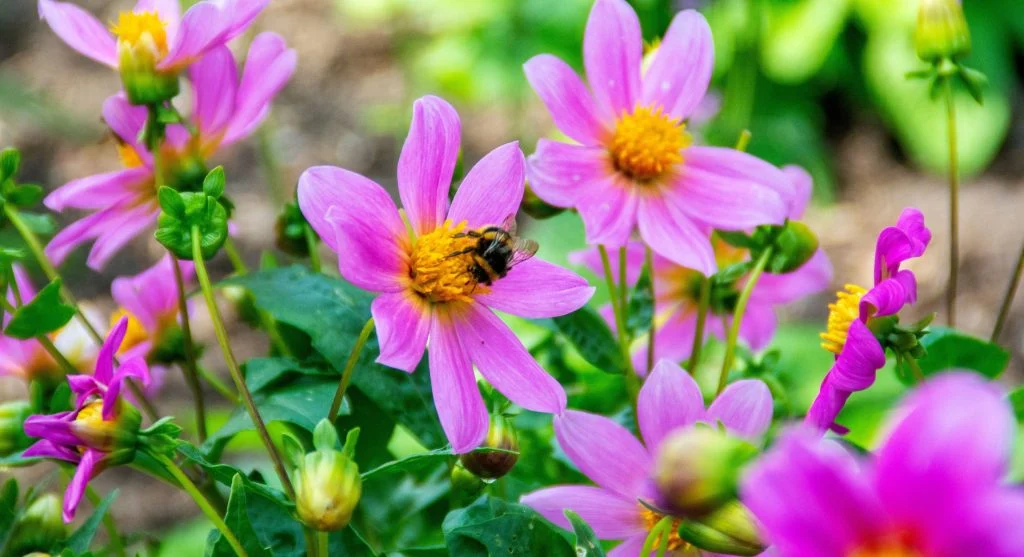
During cooler or wetter periods, insects may find moisture more easily from damp soil, leaves, puddles, or other natural sources. During hot dry weather, these sources become less dependable. The garden may still contain flowers, but the small water opportunities that existed earlier in the season may disappear faster than people realize.
Climate and ecology educators often explain that hot weather changes how supportive a yard really is. A planting area that seems wildlife-friendly in spring may become more stressful in midsummer if it lacks water access. A shallow pebble water dish helps fill that seasonal gap by offering a steady small-scale source when the surrounding landscape has become drier and harsher.
This is why such a simple feature often becomes most valuable exactly when flowers are blooming strongly but the ground is drying out.
What households often misunderstand about pollinator help
One common misunderstanding is that helping pollinators always requires a large planting scheme or a major habitat project. In reality, many useful actions are small and specific. A water dish does not replace flowers, nesting habitat, or reduced pesticide pressure, but it adds one more basic need that is often overlooked. Support becomes stronger when it is layered.
Pollinator researchers often explain that small features matter because gardens operate as systems. Food, shelter, water, and safer conditions all work together. A household may already have some of these in place without realizing what is missing. The water dish is often valuable because it fills a gap that the rest of the garden has not addressed yet.
This is why even a small new feature can have real ecological value. It does not have to do everything to be useful.
What experts recommend households notice first
Experts usually recommend looking at the yard during the hottest or driest part of the week and asking a simple question: where could a small insect find safe water here right now? If the answer is unclear, that usually suggests the space could benefit from one intentional source. They also suggest watching whether pollinators are active in the area already. A dish near an active planting zone is more likely to be discovered and used.
Regular checking matters too. The dish should not be allowed to dry out completely for long periods, and it should stay reasonably clean so that the water remains inviting. The setup works best when it becomes a maintained feature rather than a one-time project that is forgotten.
These details matter because pollinator support is usually strongest when small features stay reliable over time.
Why this fits practical backyard habitat care
Practical backyard habitat care often succeeds through simple repeated actions rather than dramatic changes. A shallow pebble water dish fits that model well. It is small, inexpensive, easy to place, and easy to understand. Yet it helps a group of animals that many gardens depend on and many people overlook once the flowers are planted.
Ecology educators often explain that healthy local spaces are often built from a series of small helpful features working together. A flower patch, a little shade, a safer watering point, and fewer harsh disturbances can all add up. The pebble dish is one of the clearest examples of how a modest design choice can support more life without requiring a full garden redesign.
That is why a shallow pebble water dish can help bees and other pollinators during hot weather. It gives them a safer way to access something just as basic as food, and that can make a meaningful difference in how usable the garden feels during the toughest part of the season.
Frequently Asked Questions
Q: Why do bees need a shallow pebble water dish instead of a deep bowl?
A: Bees and other small insects need stable landing points, and pebbles help them reach water safely without slipping into open water.
Q: Does this replace planting flowers for pollinators?
A: No. Experts often explain that it works best as one extra support feature alongside flowers and other pollinator-friendly garden elements.
Q: Where should a pebble water dish be placed?
A: A calm spot near flowering plants but not in constant harsh exposure usually works well.
Q: Is this most useful in hot weather?
A: Yes. Dry, warm conditions often reduce natural moisture sources, which makes a safe garden water point especially helpful.
Key Takeaway
A shallow pebble water dish can help bees and other pollinators during hot weather because it provides safer access to water in a form small insects can actually use. Experts often explain that pollinator-friendly gardens work best when they support basic needs beyond flowers alone. A simple dish with pebbles can turn open water from a risk into a resource. Understanding this feature helps households add one more practical layer of support to local garden life.