
Seagrass meadows are plants growing underwater in fairly shallow areas along the coast, and lots of creatures in the sea rely on them. Though people don’t talk about them as much as coral reefs or mangrove forests, many scientists who study the sea frequently say these seagrass beds are among the most essential environments found close to the shore.
Lots of people who study the ocean (marine biologists), the coast (coastal ecologists), and how to manage the shoreline (shoreline planners) point out that seagrass meadows hold soil in place, make the water much clearer, and give many kinds of animals a safe place to live. They’re valuable for what they do, as well as from a natural standpoint, because good health for coastal waters comes from these related areas all being able to support each other.
Why seagrass meadows matter in coastal ecosystems
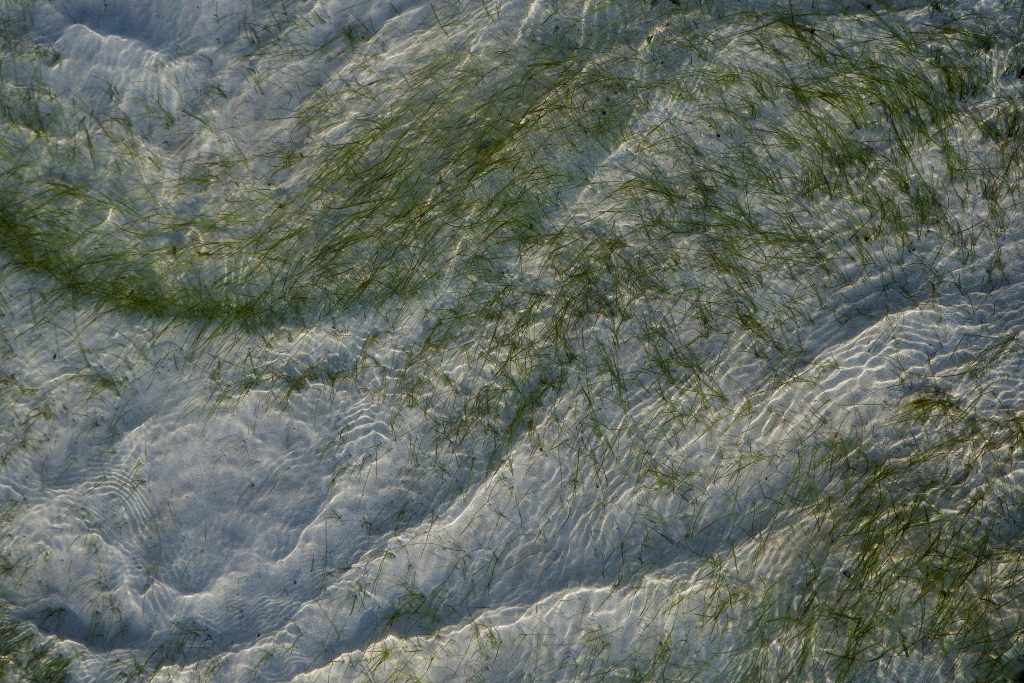
Seagrass grows in the ocean where the sun still gets to the bottom, and it’s typically in calmer, or at least partially sheltered, areas along the shore. It’s a flowering plant that lives under the water, and unlike seaweed, it has roots, leaves, and stems that grow beneath the ground. Because of this it is very good at keeping sand and soil from moving, and it actually builds the shape of the seabed nearby.
Scientists who study coastal ecosystems will tell you seagrass meadows create a lot of form in shallow water; without them, open sand would be easily moved. This form provides fish, clams, and lots of little creatures with a place to hide, eat, and travel.
Because of all this, seagrass meadows are frequently referred to as ‘foundation habitats’, and they have a big effect on how water, sand, and sea creatures all work together in the coastal area.
How seagrass meadows support coastal marine habitat
Lots of creatures in the sea go to seagrass as a safe place while they are young and weak. Little fish, tiny shrimp-like creatures, and invertebrates are frequently able to get both something to eat and a place to hide amongst the blades of grass. Because the seagrass grows so thickly, it lowers how much danger they are in from animals that want to eat them, and gives a more consistent setting.
People who really know about homes in the sea often say that not all animals live in seagrass all the time. Many will start their lives in seagrass but then swim off to coral reefs, the more open ocean or other places close by. This means seagrass beds are important for a much bigger area than just themselves, as they help a large amount of sea life to get food.
If these safe havens didn’t exist, certain animals would lose a really helpful starting place for life, somewhere to live and get bigger.
Credit: Andrei Simon Amisi / Pexels
Why seagrass meadows help create cleaner coastal waters
Cleaner coastal waters are often linked to healthy underwater vegetation. Seagrass leaves slow water movement, which helps fine sediment settle rather than remain suspended in the water. This can improve water clarity and create more stable conditions in shallow coastal areas.
Water quality researchers often explain that seagrass meadows also trap particles moving through the water. This does not make them a complete water treatment system, but it does help reduce some of the turbulence and sediment spread that can cloud coastal zones.
Better water clarity can support other habitats as well. More light reaching the seabed helps coastal plant life continue growing, which strengthens the whole system.
How seagrass meadows support shoreline ecosystems
Shoreline ecosystems work best when land and water habitats are connected. Seagrass meadows often sit near estuaries, beaches, mangroves, and tidal flats, where they help link these systems together. Their root networks stabilize seabed material, which may reduce some erosion pressure in nearby shallow waters.
Coastal planners often describe seagrass as part of a broader protective system rather than a stand-alone barrier. These meadows can reduce wave energy close to the bottom and help maintain the shape of shallow coastal areas over time.
This matters because healthier shorelines depend on stability beneath the water as much as they depend on visible vegetation above it.
What threatens seagrass meadows over time
Seagrass meadows can be damaged by pollution, dredging, heavy boat traffic, disturbed sediment, and declining water quality. Because seagrass depends on sunlight, cloudy or murky water can weaken growth. Repeated disturbance can also uproot plants and make recovery slow.
Marine conservation experts often warn that damage may spread beyond the meadow itself. If seagrass declines, nearby fish habitat, sediment stability, and water clarity may also suffer. This can weaken several parts of the coastal ecosystem at once.
That is why seagrass loss is often treated as more than a single habitat problem. It can signal wider pressure on coastal waters and shoreline ecosystems.
Credit: Pixabay / Pexels
What experts recommend for seagrass meadow protection
Generally, people who know about this sort of thing say we should keep the water clear, avoid too much disruption of the coastline, and be careful about how we do things in the ocean so we don’t hurt the places where sea creatures live. Because seagrass needs sunlight and to not be tossed around, even lots of little issues happening over time can seriously decrease how much seagrass there is.
Those who manage our coastlines point out that seagrass is best when it’s considered a part of a larger group of habitats. Mangroves, areas of mud exposed at low tide, places where rivers meet the sea, reefs, and the seagrass itself all help each other; if you look after one but ruin another, the whole system tends to become less healthy.
Seagrass meadows are valuable because they are a low-key home to marine life, they help make coastal waters cleaner, and they build up stronger shorelines.
Frequently Asked Questions
Q: What are seagrass meadows?
A: Seagrass meadows are shallow underwater areas where marine flowering plants grow in dense patches along the coast.
Q: Why are seagrass meadows important for marine life?
A: They provide shelter, feeding space, and nursery habitat for many fish, crustaceans, and other marine species.
Q: Do seagrass meadows help keep coastal waters cleaner?
A: Experts often explain that they can improve water clarity by slowing water movement and helping sediment settle.
Q: What damages seagrass meadows most?
A: Poor water quality, disturbed sediment, pollution, dredging, and repeated physical damage are common threats.
Key Takeaway
Seagrass meadows are important. They’re the foundation of life for lots of sea creatures in coastal areas, improve water quality along the coast, and protect the land where the sea meets the shore; we don’t usually think about how they do this. Many scientists consider them to be a subtle but absolutely vital part of a thriving coastline. They’re valuable because they hold the water in the relatively shallow areas and provide a safe home for a huge variety of sea life. Studying seagrass meadows illustrates just how much a coast’s ability to recover from trouble depends on life under the water, not only on the beaches and land we see.