

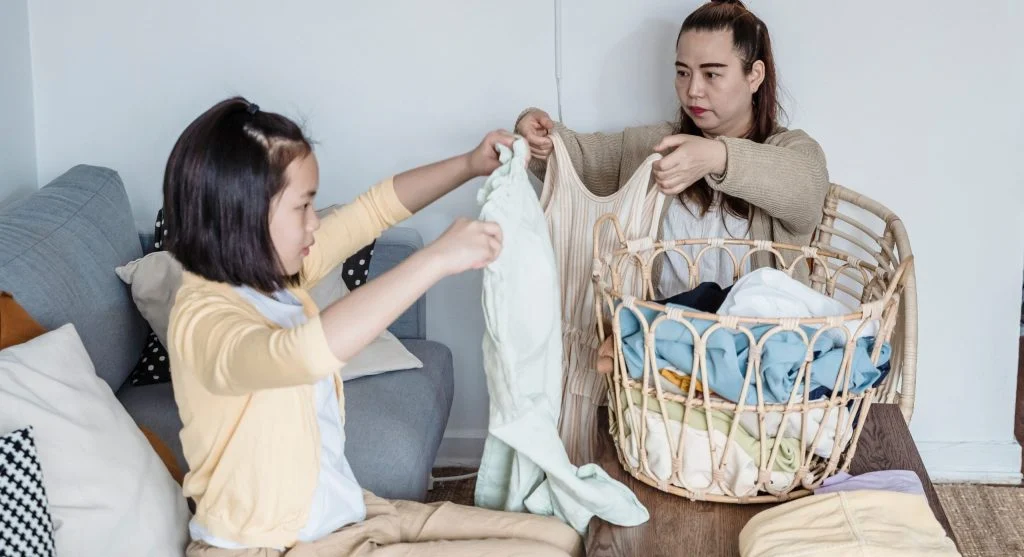
A one-basket mend system can help keep clothing in use longer because many garments are not thrown away after they completely fail. They are often set aside because of one small issue that never gets fixed. A missing button, loose hem, split seam, or broken strap may seem minor at first, but once the item leaves daily use, it can sit untouched for months.
Textile waste researchers, home organization specialists, and clothing care educators often explain that the real problem is not always the size of the damage. It is the lack of a clear place for repairable clothes to go. A one-basket mend system solves that by giving every fixable item one visible destination instead of letting it scatter across drawers, chairs, and laundry piles.
Why Small Clothing Damage Turns Into Waste So Easily
Clothing usually leaves daily use gradually, not dramatically. A shirt with a loose button is skipped for one week. A pair of pants with a small tear is placed on a chair “for later.” A tote bag with a weak strap is set near the laundry area. None of these items is fully useless, but each one becomes less likely to return once it loses its normal place in the wardrobe.
Clothing care experts often explain that this is how textile waste begins quietly. The household does not decide all at once that the garment is worthless. Instead, the item slips into a waiting zone. Once it stays there long enough, replacing it becomes easier than repairing it, and throwing it away starts to feel justified even when the problem was small from the beginning.
This is why organization matters so much. The garment is often lost through delay rather than damage.
How a One-Basket Mend System Changes the Outcome
A one-basket mend system changes the outcome by creating one simple rule: if the clothing item is still worth wearing after a small fix, it goes into the basket and nowhere else. This keeps repairable clothing visible, grouped, and easier to review. Instead of becoming random clutter in different corners of the home, the items remain part of one active system.
Home organization researchers often note that grouped problems are easier to solve than scattered ones. When five repairable garments live in five different places, each one feels easy to ignore. When those same five garments sit in one basket, the household can immediately see the pattern and respond to it. That visibility often prevents clothing from slipping fully out of use.
In this way, the basket does more than hold fabric. It protects garments from disappearing into the background of everyday life.

Why Clothing Repairs Fail When There Is No Set Place for Them
Without a set place, repairable clothing tends to compete with many other unfinished household tasks. A shirt may get mixed back into clean laundry. A damaged sock may sit on a dresser. A jacket may hang in the closet even though its zipper needs attention. These half-decisions make it harder for the household to know what still belongs in use, what needs repair, and what is no longer wanted.
Wardrobe specialists often explain that uncertainty is one of the strongest drivers of clothing waste. When a garment has no clear status, it usually loses momentum. It is not fully wearable, but it is not fully processed either. A one-basket mend system removes that uncertainty by giving every repairable item the same clear category: not finished, not discarded, but waiting with purpose.
This is why the system often works better than a vague promise to fix things eventually. The basket turns intention into structure.
What Kinds of Garments Benefit Most From a Mend Basket
The best candidates are usually the clothes people already know they would keep wearing if one small issue were fixed. Everyday jeans, school uniforms, cardigans, tote bags, children’s clothing, sleepwear, simple dresses, and work basics often fit this pattern well. These are not sentimental storage pieces. They are active wardrobe items interrupted by one manageable fault.
Repair educators often suggest starting with garments that fail in simple ways: loose hems, popped seams, missing buttons, minor tears, weak elastic, or worn patches at predictable points. These repairs are often easier to complete than more complex alterations, which means the system is more likely to feel useful early on.
This matters because the goal is not to save every textile in the house. The goal is to keep clearly wearable clothing from becoming waste too early.
Why One Basket Usually Works Better Than Several Repair Piles
One basket often works better than several repair piles because it keeps the system easier to understand. A pile in the bedroom, another near the laundry, and a third in the closet may seem manageable at first, but together they often create confusion. People forget what is waiting, what has already been reviewed, and what still deserves attention.
Home systems experts often explain that a single repair basket creates a stronger mental rule. Everyone in the household knows where mendable clothing belongs. That consistency helps reduce the common problem of garments entering a “temporary” location and then staying there indefinitely. One basket is not only tidier. It is easier for the brain to trust.
This is why smaller, more defined systems often outperform larger flexible ones. They remove choice at the exact moment when delay usually begins.

How the Basket Supports Lower Textile Waste at Home
Lower textile waste at home often depends on extending clothing life at the exact moment when garments begin slipping out of rotation. A mend basket helps with that because it shortens the distance between noticing damage and taking action. The fix may still happen later, but the item is no longer drifting through the home without a plan.
Textile waste educators often explain that clothing waste is not only about overbuying. It is also about undermaintaining what is already owned. A garment that could have lasted another year may leave the wardrobe early because no system existed to hold it while one small fix was waiting. The basket protects that missing step.
In this way, the basket does not replace sewing skill or repair time. It makes those things more likely to happen before the garment is forgotten.
What Experts Recommend Households Notice First
Experts usually recommend watching which garments repeatedly leave use because of small problems. If children’s clothes, work shirts, tote bags, or lounge items keep developing fixable faults and then disappearing, that pattern often points to a repair organization issue rather than a clothing quality issue alone. The basket becomes most helpful when it responds to a repeated problem the household can already see.
Wardrobe advisers also suggest reviewing the basket regularly so it stays active rather than turning into storage. A brief weekly or twice-monthly check is often enough. The strongest mend systems are not the ones with perfect sewing plans. They are the ones that prevent clothing from being forgotten before a repair decision is even made.
This early review matters because the basket works best as a bridge back into use, not as a permanent holding zone.
Why a One-Basket Mend System Fits Practical Lower-Waste Living
Practical lower-waste living works best when it supports normal household behavior instead of demanding ideal behavior. A one-basket mend system fits that approach because it accepts that repairs may not happen instantly, but it still prevents garments from becoming invisible. It creates order around delay, which is often exactly where textile waste begins.
Circular economy researchers often explain that longer product life usually depends on simple systems that keep repairable items active rather than abandoned. Clothing is especially vulnerable because it moves quickly through laundry, storage, and daily dressing routines. One basket gives damaged garments a stable place in that movement so they remain easier to recover.
That is why a one-basket mend system can keep clothing in use longer than expected. The basket itself is simple, but the amount of waste it prevents through visibility, grouping, and follow-through can be much larger than it first appears.
Frequently Asked Questions
Q: What is a one-basket mend system?
A: It is a simple home system where all repairable clothing goes into one dedicated basket instead of being scattered in different places.
Q: Why does a mend basket reduce textile waste?
A: It reduces textile waste by keeping damaged but wearable clothing visible and organized until a small repair can return it to use.
Q: What kinds of clothing belong in a mend basket?
A: Everyday items with small fixable issues such as missing buttons, loose hems, minor tears, or weak seams often belong there.
Q: Should the basket be kept forever if repairs take time?
A: Not usually. Experts often recommend reviewing it regularly so the basket stays active rather than turning into long-term storage.
Key Takeaway