
Drying laundry indoors is sometimes unavoidable, but doing it all at once can make a room feel much damper than expected. Freshly washed clothes release a surprising amount of moisture into the air as they dry. When a large load is spread across drying racks indoors, the room often has to absorb more moisture than it can comfortably handle. The result can be heavier-feeling air, damp windows, and living spaces that take much longer to feel fresh again.
Building advisers, indoor comfort researchers, and household routine specialists often explain that the issue is not indoor laundry itself it is the amount of moisture released at one time. In homes with limited ventilation or where outdoor drying is not practical, drying smaller batches often creates a more comfortable indoor environment than hanging an entire load at once.
Why Drying Laundry Indoors Changes the Feel of a Room
Most people think about laundry in terms of clean clothes and drying time, but every load also introduces moisture into the home. As shirts, towels, socks, and bedding dry, they slowly release water into the surrounding air. In apartments, utility rooms, bedrooms, or hallways, that moisture can build up faster than expected, especially when windows remain closed or outdoor humidity is already high.
Indoor climate specialists often explain that this is why a room can begin feeling noticeably different within a short time of hanging wet laundry. The change is not always dramatic at first. Instead, the air gradually feels heavier, less crisp, and slower to return to normal. When a large amount of laundry is drying indoors, that effect can last much longer than anticipated.
This is why indoor drying is not simply about drying clothes it also affects the comfort of the room where it happens.
How Smaller Batches Reduce Indoor Moisture
Drying laundry in smaller batches spreads moisture release over a longer period instead of introducing it all at once. When only part of a load is drying indoors, the room usually has more time to absorb and release that moisture before another group of clothes is added. As a result, the air often feels lighter and more comfortable.
Home environment researchers frequently note that indoor spaces handle gradual moisture much better than sudden increases. A room that comfortably dries one rack of clothing may struggle when asked to dry two full racks along with heavy towels and bedding at the same time. Although the total amount of moisture is eventually the same, the timing makes a significant difference.
That is one reason smaller batches work so well in everyday homes. They reduce the strain on both the room and the household routine.

Why Overcrowded Drying Racks Often Slow the Process
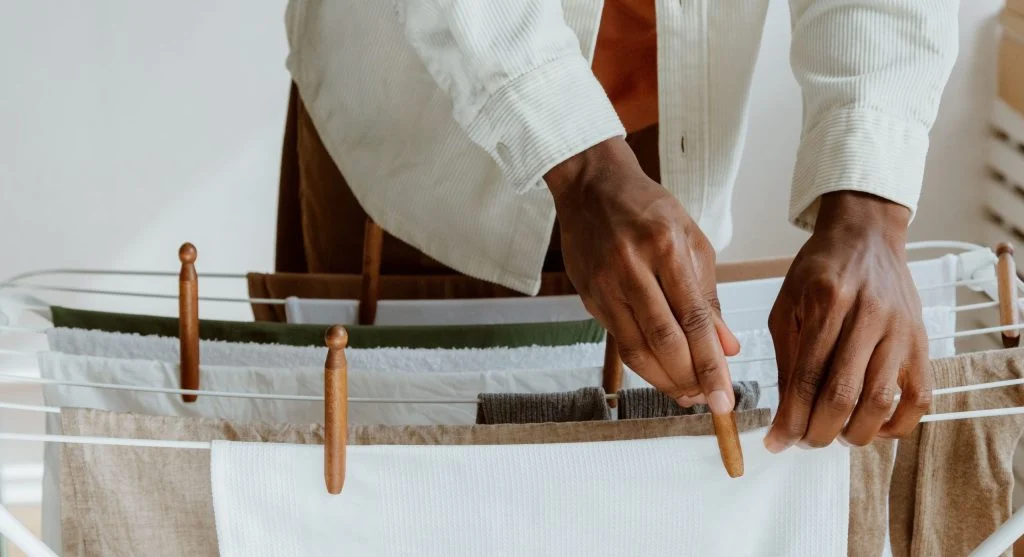
Packing a drying rack with as many clothes as possible may seem like the fastest solution, but it often has the opposite effect. When garments overlap or sit too close together, air cannot circulate freely between them. Clothes stay damp for longer, and the room continues holding excess moisture throughout that extended drying time.
Household routine experts often explain that drying works best when air can move easily around each item. If towels bunch together, shirts overlap, or sheets hang too closely, moisture has fewer opportunities to escape. The room ends up carrying more humidity for longer, making the entire process feel slower.
This is why drying smaller batches is not necessarily less efficient. With better airflow, clothes often dry more evenly and the room returns to normal sooner.
How Smaller Batches Make Rooms More Comfortable
Indoor drying affects more than just the area around the drying rack. Whether clothes are hanging in a bedroom, hallway, utility room, or living space, large amounts of wet laundry can make the entire room feel more crowded and less inviting. Smaller batches reduce both the physical clutter and the extra moisture, making the space easier to use while the clothes dry.
Home comfort advisers often point out that people respond to more than just temperature. They also notice how settled and comfortable a room feels. A space filled with damp laundry often feels visually busy and physically heavier. Drying fewer items at a time helps maintain a calmer atmosphere, particularly in homes where laundry shares space with everyday living.
That is why this simple habit often improves comfort in more than one way. The air feels fresher, and the room remains more enjoyable to spend time in.
Why Thick Fabrics Need Extra Attention
Not all laundry releases moisture at the same rate. Heavy fabrics such as towels, jeans, sweatshirts, blankets, and bedding usually hold much more water than lightweight clothing. Because they take longer to dry, they continue adding moisture to the room for a much longer period.
Building advisers often recommend paying particular attention to these bulky items. A rack filled with lightweight shirts may dry comfortably indoors, while several thick towels and heavy trousers can noticeably change the feel of the same room. This does not mean these items should never be dried inside—it simply means they often benefit most from additional spacing and smaller drying groups.
This is where smaller batches become especially practical. They allow the amount of laundry to match the room’s ability to handle moisture.
What Smaller Drying Loads Can Teach You About Your Home
One unexpected advantage of drying laundry in smaller batches is that it reveals how your home naturally manages moisture. If one drying rack works well but adding a second makes the room feel much heavier, that tells you something useful about ventilation, room size, and airflow. Over time, it becomes easier to recognize the practical limits of each space.
Indoor air specialists often explain that every home behaves differently. A bright utility room with good airflow may cope much better than a compact apartment bedroom. Likewise, a shaded room may retain moisture longer than one that receives more sunlight. Smaller drying loads make these differences easier to notice because the room is never overwhelmed all at once.
Understanding those patterns helps create routines that work with the home instead of against it.
What Experts Suggest Trying First
Experts often recommend beginning with a simple adjustment: separate heavier fabrics from lighter ones and avoid filling every drying rack to capacity. Starting with a smaller, well-spaced batch allows you to see how the room responds before adding more laundry later.
They also suggest paying attention to the room itself, not just the clothes. If the air begins feeling heavier, windows collect moisture, or the room becomes uncomfortable to spend time in, those are signs that the drying load may be too large. The ideal routine allows the room to remain comfortable while the laundry dries not only after it is finished.
These simple observations are often more helpful than searching for one perfect drying method. The best batch size is usually the one your home can comfortably handle.
Why This Is a Practical Home Comfort Habit
Many effective home comfort habits succeed by reducing pressure rather than eliminating everyday tasks. Drying laundry in smaller batches follows that same principle. It does not require giving up indoor drying altogether. Instead, it spreads moisture more gradually, making it easier for the home to manage.
Home researchers often explain that comfort improves when everyday routines stop placing unnecessary strain on the surrounding environment. Smaller drying loads do exactly that. They allow the air, the room, and the household routine to recover more easily between batches. Rather than creating one large burst of indoor humidity, they create smaller, more manageable changes.
That is why drying laundry in smaller batches can make indoor spaces feel noticeably fresher and easier to live in. It is a simple adjustment, but one that often has a bigger impact on comfort than many people expect.
Frequently Asked Questions
Q: Why does drying laundry indoors make a room feel damp?
A: Wet laundry releases moisture into the air, and when too much is drying at once the room can start feeling heavier and less fresh.
Q: Why do smaller laundry batches help?
A: Smaller batches spread moisture release over time and usually make it easier for the room to cope without feeling overloaded.
Q: Are all clothing items equally difficult to dry indoors?
A: No. Thicker items like towels, jeans, and bedding often hold more water and can affect indoor air more strongly than lighter clothes.
Q: Does a fuller drying rack always save time?
A: Not necessarily. Overcrowded racks often reduce airflow, which can slow drying and keep the room damp for longer.
Key Takeaway
Drying laundry in smaller batches can make indoor spaces feel less damp and more comfortable because it limits how much moisture enters the room at one time. Experts often explain that indoor comfort depends not only on the task itself but also on how much strain it places on the surrounding environment. Smaller drying loads improve airflow, reduce long periods of dampness, and help rooms remain more pleasant while clothes dry. For many households, this simple adjustment is an easy way to manage indoor moisture more effectively.