
Keeping reusable items easy to reach can make a bigger difference than many households expect, because convenience often drives everyday choices. A reusable bag, bottle, cloth, or food container is far more likely to be used when it’s visible and within reach at the right moment. If it’s tucked away in a drawer or stored somewhere inconvenient, disposable options tend to win simply because they’re quicker.
Behavior researchers, waste reduction educators, and home organization specialists often point out that reducing household waste depends more on practical systems than on good intentions alone. A home supports sustainable habits more effectively when reusable items are positioned as the easiest option during daily routines.
Why reusable items easy to reach matter in daily life
Most household decisions happen quickly. Someone grabs a bag while heading out, reaches for something to clean a spill, or packs food while juggling other tasks. In these moments, the most convenient option usually gets used. That’s why having reusable items easy to reach makes such a difference.
Home behavior specialists often explain that people don’t ignore reusable items because they don’t want to use them. More often, they simply forget about them or can’t access them fast enough. That small delay can lead to repeated use of paper towels, disposable bags, or single-use containers—even in homes that are trying to cut waste.
In many cases, the issue isn’t commitment it’s placement. A reusable item only becomes part of the routine if it’s available exactly when it’s needed.
How convenience shapes lower household waste
Lower household waste often comes from consistent convenience rather than constant effort. When reusable options are easier to use than disposable ones, the habit tends to stick. When they’re harder to access, the system often breaks down, even if the intention remains.
Waste reduction experts often emphasize that convenience can be designed. Placing a cloth near the sink, a reusable bottle by the door, or food containers close to where lunches are prepared makes reuse more likely. These small adjustments reduce the number of decisions people have to make in the moment.
That’s why practical reuse systems focus on speed and access. The goal isn’t to create a perfect storage setup it’s to make reusable items easy to reach as part of normal daily movement.
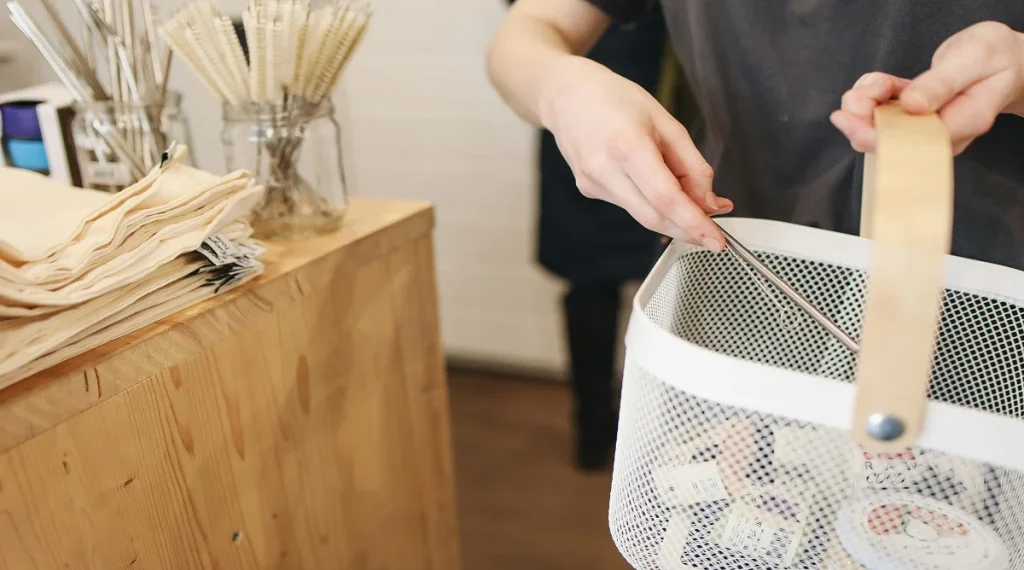
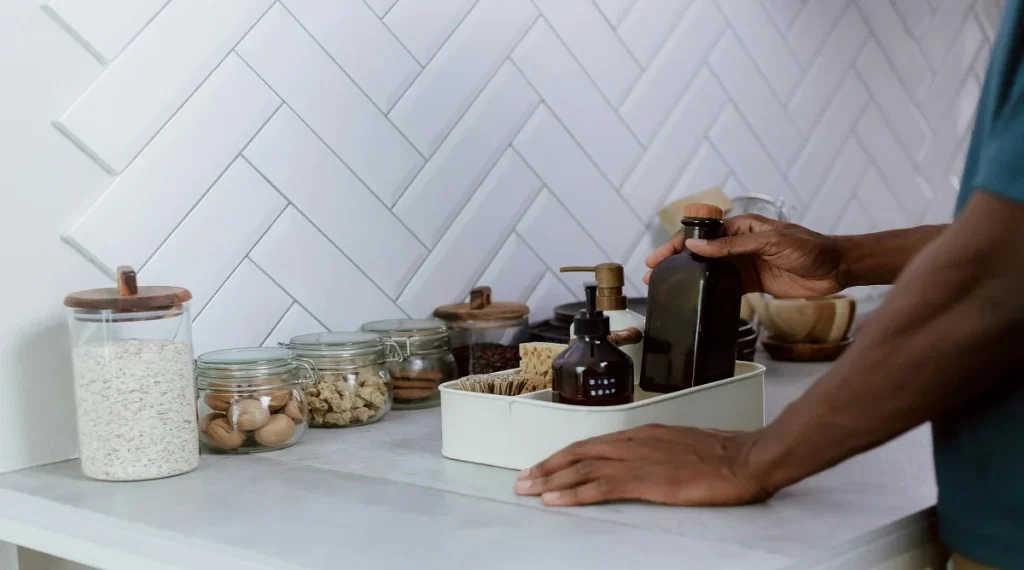
Credit: Polina Tankilevitch / Pexels
Why hidden reusable items often go unused
Reusable items that are stored out of sight often fade out of daily use. A drawer full of cloth napkins, containers tucked behind other dishes, or bags kept in a distant closet may seem organized, but they can fail at the moment they’re needed. If something isn’t visible, the household may act as if it isn’t there at all.
Organization specialists often explain that invisibility can lead to accidental waste. People may buy duplicates because they forget what they already have, or reach for disposable options because the reusable version takes too long to find. This isn’t just about carelessness it’s often a result of systems that don’t support quick, clear access.
That’s why reusable items that are easy to reach often work better than larger or more elaborate setups. Visibility and access tend to influence behavior more than storage volume alone.
How practical reuse systems work in kitchens and bathrooms
Kitchens and bathrooms are two places where this pattern shows up clearly. In the kitchen, cloth towels, food containers, jars, and lunch supplies are most useful when they’re close to where food prep and cleanup happen. In the bathroom, reusable cloths, refill containers, and everyday tools are more likely to be used when they’re within easy reach of the sink or shelf.
Home efficiency educators often point out that practical systems work best when they follow the action. If an item is stored too far from where it’s needed, people often fall back on disposable habits. When it’s placed right where the task happens, the habit feels natural and easy.
This is why room-by-room placement matters. Even a well-chosen reusable item may go unused if it’s kept in the wrong location.
Why daily sustainability habits depend on repetition
Sustainable habits are built through repetition, not one-time effort. A reusable bottle used every day has more impact than several items used occasionally. The same applies to bags, containers, and cloths habits become meaningful when they’re part of everyday routines.
Behavior researchers often note that repetition depends on low friction. When reusable items are cleaned, stored, and returned to their usual spot, they’re more likely to stay in use. When that cycle breaks and items become harder to find or reset, the habit often fades.
This is why keeping reusable items easy to reach supports consistency. Good placement makes repetition easier, and consistent use is what helps reduce waste over time.
What experts recommend households change first
Experts often suggest starting small by focusing on one or two reusable items that are used most often and placing them exactly where they’re needed. That might mean keeping bags near the door, food containers near where lunches are packed, or cleaning cloths within reach of the sink. Beginning with the highest-use item usually leads to the quickest, most noticeable results.
Waste reduction educators also recommend making the reset process easier. If a reusable item is difficult to wash, stack, or return to its spot, it’s more likely to fall out of use over time. Simpler systems tend to work better because they fit naturally into busy routines. The goal is to make reuse feel effortless, not like an extra task.
These small adjustments often have a bigger impact than expected. They shape daily habits before waste has a chance to build up.
Why this habit supports practical environmental progress
Meaningful environmental progress often comes from changes that are simple enough to maintain. Keeping reusable items easy to reach fits this idea well, because it improves everyday routines without requiring major cost or major lifestyle shifts. It helps households reduce waste by making better choices easier in the moment they matter.
Experts often note that sustainable habits work best when the home quietly supports them. A visible bag, an easy-to-grab cloth, or a container placed where food is prepared can reduce waste without needing constant reminders or effort.
Reusable items that are easy to reach matter because they turn reuse into the default choice. That makes them one of the most practical ways to reduce household waste through small, consistent changes.
Frequently Asked Questions
Q: Why do reusable items need to be easy to reach?
A: They need to be easy to reach because convenience strongly affects daily choices, especially during quick household routines.
Q: What reusable items should households place first?
A: Experts often recommend starting with high-use items such as shopping bags, food containers, water bottles, and cleaning cloths.
Q: Does good placement really reduce waste?
A: Yes. Better placement makes reusable options easier to choose, which helps lower household waste through repeated use.
Q: Is a larger reuse system always better?
A: No. A smaller system with reusable items easy to reach usually works better than a larger one that is hard to use consistently.
Key Takeaway